


This article is taken from the February 2025 issue of The Critic. To get the full magazine why not subscribe? Right now we’re offering five issues for just £10.
It is not always easy to tell whether Donald Trump, America’s first postmodern president, is joking, which is perhaps why almost everyone initially dismissed his calls for Canada to become a part of the United States, with Justin Trudeau as its governor, as nothing but a juvenile taunt against Canada’s deeply unpopular prime minister. But as Trump kept repeating the suggestion, even going so far as to tell journalists he would use “economic force” to erase that “artificially drawn line” that is the Canada–United States border, the joke increasingly wore thin.
It did not help that some high-profile Canadians seemed to agree with him. Stockwell Day, once leader of the opposition, flirted with the idea on Twitter, whilst Kevin O’Leary, briefly a serious contender for the same post, declared his intention to go to Mar-a-Lago to negotiate an “economic union”.
Whilst polls show overwhelming opposition to union with America amongst Canadians, support is notably higher amongst young people, for whom the past decade has been especially punishing, as well as in Alberta, whose denizens are perpetually aggrieved by what they perceive as the federal government’s bias in favour of the eastern provinces.
Realistically, American annexation of Canada is not going to happen. Trump’s remarks may well simply be a negotiation tactic — he has made it clear he intends to impose across-the-board tariffs on Canadian exports in order to extract various concessions. Meanwhile, Canadian politicians, including those who spent much of their careers denigrating Canada as a genocidal, racist, colonial state, have rallied around the flag. Quite unintentionally, Trump has provoked a revival in Canadian nationalism.
But the episode has rattled many Canadians, who find themselves appalled by the idea of becoming Americans, but who find it difficult to articulate why. A decade after Justin Trudeau told the New York Times that “there is no core identity, no mainstream in Canada”, even progressive Canadians are finding out, belatedly, that having a national identity matters. But what is it?
❀
Why does Canada exist? This may seem like a strange question. No one asks, say, France or Paraguay to justify their statehood. But this question has long preoccupied Canadians.
Canada is a country of disparate regions with provinces stretching from ocean to ocean, each possessing distinctive local cultures, economies and even languages. National unity is a national obsession, as is separatism, traditionally associated with Quebec but increasingly popular in the western provinces. Regional differentiation is such that there are sometimes more trade barriers between provinces than with a foreign country. If Canada did not exist, it is not obvious that it would be necessary to invent it.
One common answer is that Canada’s identity is that it is not the United States. This notion is now predominantly associated with the progressive vision of Canadian nationhood, but it was once a profoundly Tory one. After the rebel victory in the Thirteen Colonies, many of those who remained loyal to Britain fled to what is now Canada, their allegiance to the Crown made only more intense by the loss of their homes. Unsurprisingly, they and their descendants tended to be virulently anti-American.
It was only in the second part of the 20th century, after English Canada self-consciously moved away from its historical British identity in favour of a new, ahistorical one — Quebec never really followed suit — that Canada’s anti-American identity came to adopt social progressivism as its key distinctive feature.
In that vision, Canadian identity is based on things such as gun control (though this remains a strictly urbanite concern); publicly-funded healthcare (the well-heeled go south to skip waiting lists); participation in UN peacekeeping operations (which are mostly useless); and other such shibboleths which separated us from our gun-loving, healthcare-hating, UN-rejecting neighbours, never mind that much of Canadian progressivism comes straight from America.
But is it enough to have a negative national identity, even if it can be expressed in positive terms such as loyalty to the Crown or socialised healthcare? Independence, as generations of Canadians have known, has a price. By refusing to join the United States, Canadians have forfeited a measure of economic prosperity that otherwise would have been ours.
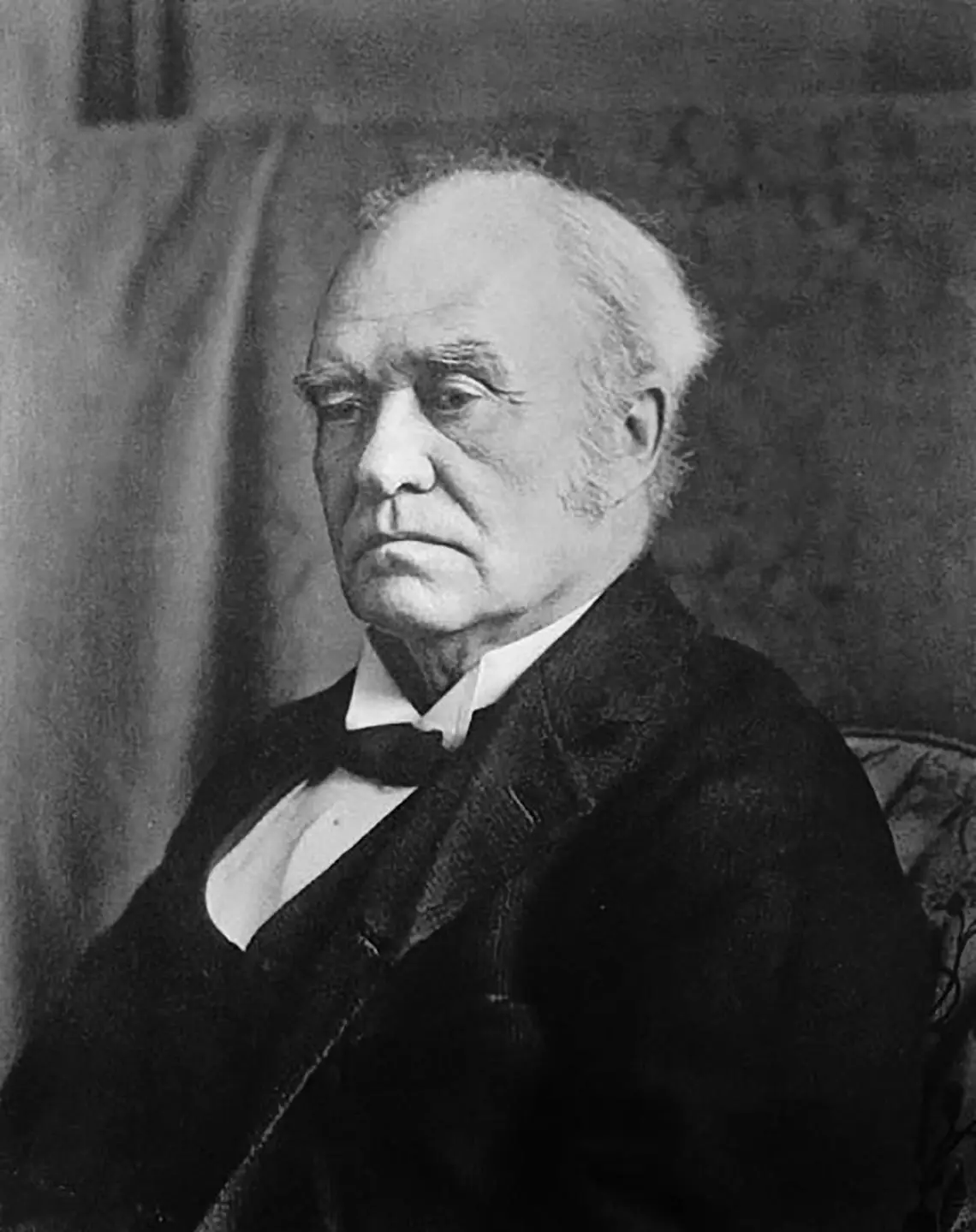
Predictably, there were always some Canadians who favoured closer association with America. No less a man than Canada’s third prime minister, Sir John Abbott, was a signatory in his youth to the 1849 Montreal Annexation Manifesto, which called for Canada’s merger with the United States, a measure which, its proponents claimed, would double Canadian property values, increase trade, improve productivity, the sort of arguments the likes of Trump and O’Leary still use today.
Six decades later, the signature of a free trade agreement between the two countries was lauded by the Speaker of the US House of Representatives as the prelude to the stars-and-stripes “fly[ing] over every square foot of British North America up to the North Pole”. The Tories, wrapping themselves in the flag — in those days the Union Jack — then crushed the Liberal government that had negotiated the agreement in an election that represented the high water mark of Canadian imperial jingoism. Continental free trade would not materialise until 1989, by which time the two parties had switched stances over the issue.
❀
Yet Canada continued to thrive. By the end of the last century, Canadians belonged to one of the world’s most prosperous and civilised societies, which could lay claim, however imperfectly, to the best of North American dynamism as well as the best of European political traditions.
Meanwhile, successive Liberal governments astroturfed into being a new national identity which, whilst ahistorical and never accepted by Quebec, looked close enough to the genuine article. There was a new national flag (described by a former prime minister as one that a Peruvian might mistakenly salute); multiculturalism was entrenched in law as an official ideology; and a constitutional bill of rights, which ceded the levers of power to activist judges, somehow became a cornerstone of this new Canadian identity. The monarchy was quietly sidelined, as was Canada’s military history, a strange omission for a country that can claim to have won every single war it has fought — and there have been many.
Justin Trudeau believed in a national mythos, but in his own way. In his decade in office, in fits of truly destructive American sin-envy, Trudeau endorsed the idea that Canada was built on genocide, that Canada is currently committing a genocide, that Canada was founded, and is sustained, on nothing but criminal inequities.
He sat idly whilst dozens of churches were burned in arson attacks, whilst monuments to the country’s founders were pulled down and the nation’s history was rewritten to villainise those who built Canada. He had Canadian flags half-masted for six months after the discovery of alleged mass graves from which not a single body has been found. Canadians’ pride in their country is at its lowest since records began. How could it be otherwise, when they are being told that theirs is a genocidal state?
Canada could perhaps just about muddle through this fit of self-hatred if its economy kept well. But a series of disastrous policy decisions, combined with Mr Trudeau’s insistence in treating Canada as an open-door zone for low-skilled foreign labour, have undermined the prosperity which older, but not younger, Canadians still see as a matter of right, whilst undermining social cohesion. In these circumstances, the only surprising thing is that support for American annexation, with its promises of wealth and national purpose, is not higher.
❀
The path to national healing begins with kicking the Liberals out of office. The contenders for Mr Trudeau’s tarnished crown may all be trying to outdo each other in performative nationalism, but the reality is that they said nothing and did nothing whilst Canada’s identity was being gratuitously trashed, and some of them took an active part in its destruction.
But the next government will have to be ambitious. It is no longer possible to assume, as we once did, that we are protected by a benign neighbour, that Canada’s superiority is self-evident, that to not be American, although necessary, is a sufficient condition for the existence of Canada as a distinct country.
The progressive nation-building project of the last eight decades must be replaced by something less artificial and more anchored in the land, whilst acknowledging that it sprang from fundamentally honourable motives. The heresies of the Trudeau era must be wholly repudiated, although Mr Trudeau is welcome to stand trial at The Hague for state-sponsored genocide if he continues to maintain that such a thing happened under his watch.
The stories of those who built Canada, of those who fought and died for her, must be told once again, not without warts, but without self-loathing, and with an appreciation of their achievement in creating a successful country out of unpromising conditions. The federal government will have to stop funding those whose careers are built on denigrating their country, which they can do so in their spare time and on their own dime.
Above all, as a former Canadian prime minister said, decades before a certain New York real estate developer was a glint in his mother’s eye, Canada first, Canada last, Canada always. Only then can Canada again fulfil its promise as “the star towards which all men who love progress and freedom shall come”.


