


This article is taken from the June 2026 issue of The Critic. To get the full magazine why not subscribe? Find our subscription offers here.
Geoffrey Smith was not a household name, so his death brought few encomia. Andy Kershaw, who achieved a celebrity of sorts in his younger days, was sent off with many tributes. As Sinatra sang, that’s life.
They were shaped by different clay. Smith, 83, the jazz lover from Michigan, was a gentle soul who wore his learning lightly. Kershaw, 17 years his junior, was a crotchety Lancastrian who gargled with treacle.
There was room for both, and Radio 3 granted each a stage, but it’s not unfair to suggest we should place more value on Smith’s softer voice. Scholarship trumps zealotry, particularly when it is veiled by modesty.
It’s time once more to roll out Billy Blake: “Damn braces: Bless relaxes”. Kershaw could barely conceal his indignation at the world’s follies. Smith welcomed listeners as guests in his house. Those weekly programmes brought hours of delight for listeners who wanted to know more about jazz, because he never felt the urge to hector. Those who have mastery of a subject don’t have to.
You could tell, by cocking an ear, that Smith took broad views. He read books, attended exhibitions and knew his Wilder from his Truffaut. Of all the great jazzers he placed Lester Young on top, tenor horn gleaming. That wasn’t an opinion. It was judgement.
When Radio 3 stood him down seven years ago it was a sad day and a revealing one. The station was admitting “we don’t care for the things that matter as much as we once did”.
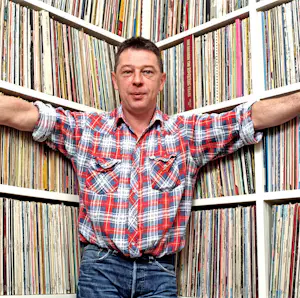
Don’t we know it? Now the primary aim appears to be making us all “relax”. There is no show devoted to high-class popular music, other than the one presented by Alyn Shipton, who has been left on his Jack Jones of a Sunday afternoon.
Shipton, who inherited Jazz Record Requests from Smith, said farewell to his predecessor, which was decent. Otherwise, it was hard to pick up anything about Smith’s life from the station he served so well so long.
Kershaw was given a wider brief by Roger Wright, the Radio 3 controller, who invited him “to surprise us”. Before his switch from Radio 1 Kershaw had been a propagandist for “world music”, however defined.
It may surprise younger listeners to know pioneers like Bartók and Stravinsky were composing music fitting that description a century ago. It may also have surprised Kershaw, whose tastes were forged in the pop world, where memories are short.
The lippy lad who never really grew up received many congratulations, and it was not unknown for him to lead the applause. As a Yorkshire cricketer once asked the great, if self-regarding, fast bowler, Fred Trueman, “Would you describe yourself as a modest man?”
Kershaw was no team player, and his sexual predations were well-known within the BBC before revelations emerged of a marital rupture. That sottish behaviour alienated so many colleagues that in the end he had few friends left.

Such people are sometimes said to add “colour”, although “colourful” personalities, as we know from a thousand wittily-written obits, have a habit of contaminating the lives of others, whose lapses are not indulged.
Like John Peel, to whom he bent a courtier’s knee, Kershaw was essentially an opportunist. Peel constantly sniffed the air, to see which way the wind blew, and dropped certain acts the moment they no longer served his purpose.
The purpose was self-preservation. He couldn’t afford to be seen slipping behind the times, which is why he took up so many ropey performers. Some of their music had merit. Most were window-dressing designed to win praise from fellow travellers on the multi-culti bus.
Kershaw picked up the baton. You would have thought, listening to his hymns to African drummers, that Bach and Mozart had entered the room for the morning levee, with Beethoven and Schubert holding their hats. He had zest, but little discrimination.
So his yelling, in a voice that became more “Lanky” with every year he spent away from his native county, lost its appeal. He was a fairground barker whose merry-go-round had broken down.
The best presenters invite others to share their enthusiasms through persuasion. Which is why we should pay more heed to genuine experts like Smith, who gave the listener credit for keeping an open mind.
It may also be pointed out he did more for “world music” than many of those born later. He had been a drummer and knew how jazz acquired and refined its voice, all the way back from Chicago and New Orleans to the French court and West Africa.
Those nourishing roots eventually blossomed into the beautiful flower called Edward Kennedy Ellington, of whom we may all be proud. That man composed world music all right, and the world will never withhold its thanks.


