


This article is taken from the April 2026 issue of The Critic. To get the full magazine why not subscribe? Get five issues for just £5.
A new exhibition at the Garden Museum celebrates the amateur botanist John Bradby Blake (1745–73), who pioneered the introduction of Chinese plants to Britain whilst serving as a supercargo for the East India Company in Canton (Guangzhou).
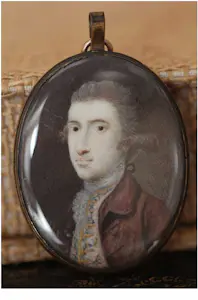
Following in his ship captain father’s footsteps, he was intent on studying Chinese plants “which may prove of benefit in my country”. Before sailing east, he sought out the leading naturalists of the day, Daniel Solander and John Ellis.
At their urging he adopted the newly devised Linnaean system, applying it to Chinese plants largely unknown in Europe. Working with the Chinese artist Mak Sau and botanist Whang at Tong, he commissioned more than 150 meticulously accurate botanical drawings; a remarkable act of cross-cultural scientific collaboration during the Canton System period (1757–1842), a time when the movement of Western merchants was tightly constrained.
Two decades before Lord Macartney’s embassy attempted to expand British trade to China, Bradby Blake was already transmitting botanical knowledge across continents. He died aged 28, before completing his ambitious Flora Chinensis, but his work fed directly into the work of Joseph Banks at Kew.
Through the East India Company and Canton nurseries, Banks then instigated many introductions of Chinese plants to British hothouses, from camellias and chrysanthemums to Rosa chinensis, the foundation of the modern rose.
Banks was followed by the great 19th century plant hunters. Robert Fortune travelled inland as trade allowed, and sent back Paeonia lactiflora, Anemone hupehensis, Rosa banksiae and Skimmias. Ernest Henry Wilson added many of the stalwarts of our woodland gardens like Acer griseum, Lilium regale, Clematis montana and Hydrangea paniculata, whilst George Forrest’s expeditions yielded hundreds of rhododendrons, primulas and alpines.
Much of China’s flora is particularly well suited to the British garden because of broad parallels in latitude, seasonal rhythm and the presence of montane climates that mirror our own cool temperate conditions.
Many of our mainstream garden plants in Britain are those of Chinese origin, and some recent rarities can still be found in collections like Maurice Foster’s at White House farm in Kent, and the Wynn Jones’s collection at Crûg plants in Wales.
Today, as political constraints once again limit collecting expeditions, the emphasis has shifted from acquisition back to understanding, propagation and conservation. Modern collectors and nurseries, whether specialist growers or institutions such as Kew, Edinburgh Botanic Gardens and Bedgebury Pinetum, hedge our collective bets by maintaining genetically diverse collections.
The horticultural equivalent of not keeping all one’s eggs in a single basket, they share endangered species across various parts of the country to see which will adapt and thrive in different conditions. Thus Bedgebury holds a specimen of the Saharan Cypress or Tarout, Cupressus dupreziana, from a surviving population of only 130 trees that exist solely in the Sahara Desert, where these 1,000-year-old trees are no longer regenerating. The equivalent of Giant Pandas in captivity, these are being conserved ex situ until conditions allow a return to their homeland.

For readers wishing to conserve or build a serious plant collection, accurate sources of knowledge are still just as vital as in Bradby Blake’s day. To understand a plant’s origin, home conditions and key characteristics for care, Plants of the World Online provides a solid taxonomic baseline whilst the RHS Plant Finder offers accessibility, if at the cost of depth.
The indispensable resource, however, is the International Dendrology Society’s Trees and Shrubs Online. A free resource where nomenclature is rigorously checked and synonymy listed, each entry is supported by specialist scholarship detailing where a plant is known to thrive, plus answering the infamous question “where are you really from?”
The research behind each painstaking entry is generally sponsored by amateur plant lovers and collectors who, like Bradby Blake, “understand the benefit this knowledge can provide to their own country”.
Notably recent users are almost as frequently from China as from the UK. In an era when plant exploration is again constrained, such work performs a vital function: enabling specialist gardens to remain pockets of resilient and beautiful conservation.
Bradby Blake did not live to see the plant collections he helped to shape. Yet as the exhibition makes clear, the global and collaborative foundations of modern horticulture were already being laid in Canton in the 1760s.


