

This article is taken from the October 2025 issue of The Critic. To get the full magazine why not subscribe? Get five issues for just £25.
Our greatest efforts are often unrewarded. The writer A.C. Benson (1862–1925) agonised over his biography of Dante Gabriel Rossetti. It was crafted “with infinite care, poking, pulling, pinching”, and yet was only “a moderate success”. Benson’s The Upton Letters, by contrast — a book that was scribbled “in an armchair, in intervals of work” and sent “uncorrected to press” — went into multiple editions and made him a household name.
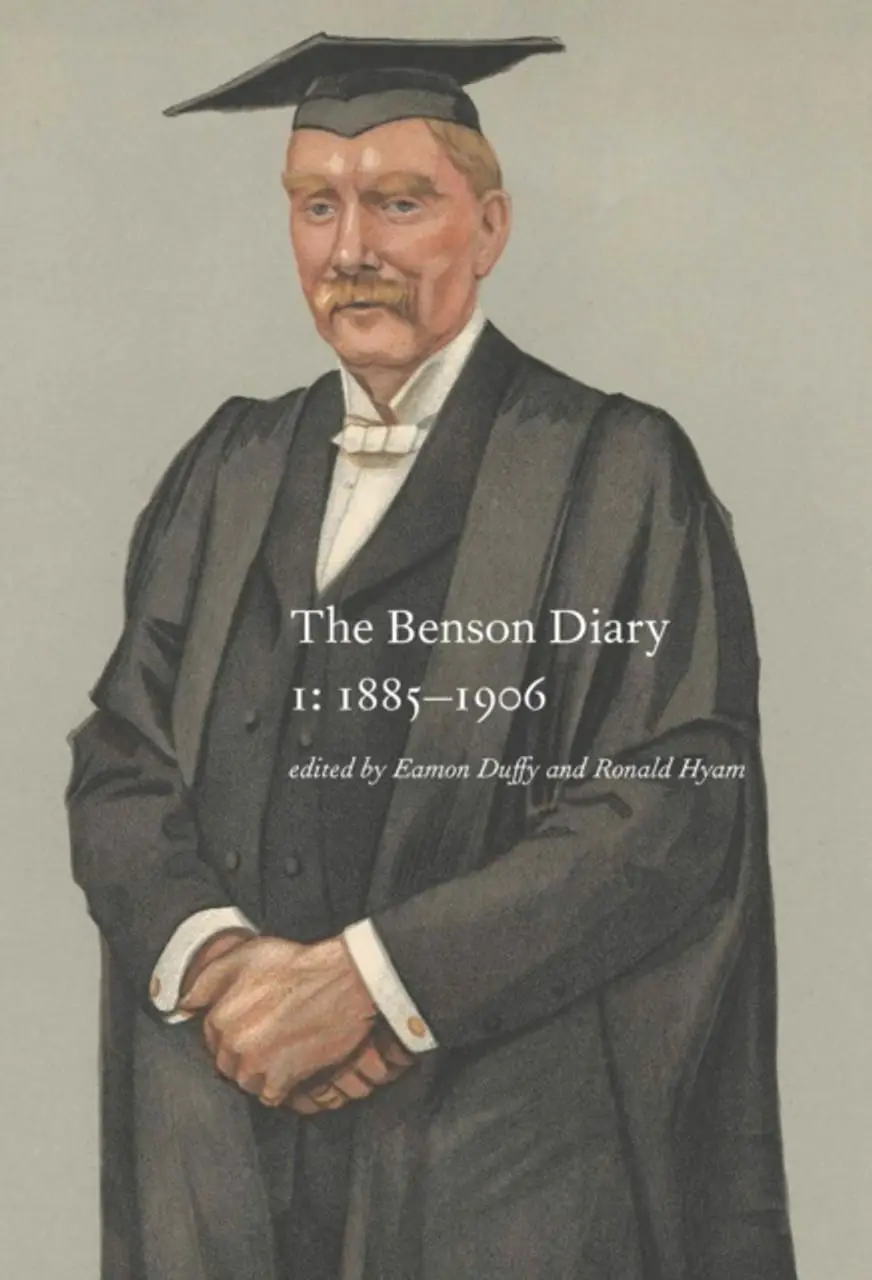
Benson wrote about these frustrations in his diaries, now published in two volumes edited by Eamon Duffy and Ronald Hyam. The task is immense: the diaries run to over four million words, and have been condensed to around one twelfth of the original text. We should be grateful for their labours. These recollections not only offer vivid evocations of the academic and literary milieu of the early 20th century, but capture something of the essence of this endlessly fascinating individual.
Readers might wonder why Benson should matter. This Eton schoolmaster and later Fellow and Master of Magdalene College, Cambridge, is best remembered for penning the lyrics to “Land of Hope and Glory”, whose melody had been adapted from a piece by Edward Elgar for the coronation of Edward VII. Yet he was also one of the most respected men of letters of the Edwardian age. That he is largely forgotten is no reflection on his talents, but rather proof of the caprice of literary trends.
The snobbishness regarding Benson’s cultural significance has never dwindled. A recent review of these diaries in the Guardian encapsulates this attitude. The reviewer, Vernon Bogdanor, seems to believe that the publication of the journals of a non-canonical writer is a waste of time. He accuses Benson of “philistine” literary judgements and bickers over his taste in music. In truth, the charge of elitism would be better levelled against the review itself.

Like many Guardian critics, Bogdanor is less interested in the quality of the work than how closely the writer mirrors his own worldview. But surely the delight of the diaristic form is that it allows us to see through another’s perspective.
Personally, I find Benson’s position on William Blake’s “funny little drawings” to be utterly wrongheaded, but that doesn’t blind me to the deftness of his writing. These diaries are not merely the records of a well-connected public figure of a bygone era, but a roadmap through a singular mind. In this sense, reading them is akin to Émile Zola’s definition of art as “life seen through a temperament”.
The temperament in question is one that many of us will find at times charming, at times rebarbative. Benson’s idiosyncrasies and private demons are laid bare throughout, which will come as a surprise to readers familiar with his other work. His bouts of depression — an inherited trait shared with many members of his family — are related in a manner both poignant and forthright.
He struggles with the pressure from his parents to marry and have children, reflecting that it would be “criminal” to “run the risk of handing to another my own miserable disposition” and “to admit another into the torture-chamber which I call my life”.
Benson was a man who felt and thought deeply. His scepticism about God and the prospect of the afterlife leads him to musings that verge on despair: “Why are our affections made so deep & permanent when our stay is so short?”
He was also sensitive to betrayal from friends. He was devastated when the author Mary Cholmondeley used him as the model for an unflattering character in her novel Prisoners. On occasion, he records portentous nightmares, some of which were seemingly related to an unspoken trauma. In an entry on 9 November 1894, he calls the day the “anniversary of my great misfortune”, but no further details are forthcoming.
Many autographical writings amount to a kind of fictive reconstruction of the self. Part of the pleasure of reading them is to discern where reality ends and legacy-conscious self-flattery begins. In some cases, the more outrageous elements are exaggerated or invented, particularly from writers who like to shock.
One thinks immediately of the autobiographies of Benvenuto Cellini and Anthony Burgess or the diaries of Joe Orton. These works shamelessly interweave threads of fact and fiction, and are all the more absorbing for it. Not so with Benson, who, though surely not immune from embellishment, is candid even to his own detriment. This quality is all the more remarkable given that he knew that his diaries were one day likely to be published, and many of them were even read during his lifetime by close friends.
That said, when it comes to sex he is more restrained. Benson was, in all probability, a celibate homosexual, but his prudishness means that he is often guarded on the subject. Freudian analysts will doubtless find much fodder in his descriptions of dreams that suggest sexual repression.
One in particular reads as almost comically transparent. “I found a large creature like a lizard on a garden bed, soft & pale, like an uncooked sausage. I stroked its head with my stick; it had neither eyes nor mouth; but it uttered somehow a croaking sound, which I knew meant pleasure, & came to me in a caressing manner: I fled in disgust.”

Whilst reading the diaries I was reminded of an anecdote in Private Road, the second autobiography of the novelist Forrest Reid. He relates a conversation with Benson and the playwright J.M. Synge about The Upton Letters, whose authorship was then only known at Cambridge. “Is it a book there is any necessity to read?” said Synge, obliviously posing the question to its author. Benson replied: “Not in the least.” As Reid reflected, “generations of the public-school tradition” lay behind that answer.
Yet there is more to this reaction than mere stoicism or self-effacement. Benson did not consider himself to be a significant literary figure, and his ultimate goal — “to write a great & beautiful book” — was one that evaded him. It is apt that the epigraph to The Upton Letters is a line from the twenty-first idyll of Theocritus, in which two fishermen spend a sleepless night discussing their dreams.
One of the men tells the other how he once dreamt of catching a golden fish. His friend gently rebukes him, suggesting that he should focus on netting a real fish that might at least provide nourishment.
As a man whose aspirations were forever unfulfilled, this idyll resonated with Benson. “I seem to be tending nowhere in particular,” he writes, lamenting that the only readership he had cultivated appears to be of the “feminine tea-party kind”.
By all the usual metrics, he was a success, but, in the books published during his lifetime, we sense a man who is continually holding back. It was only in his diaries that he found the freedom to write unfettered, and the results are fresh and compelling. In these private pages, he snagged his golden fish.


