

This article is taken from the February 2025 issue of The Critic. To get the full magazine why not subscribe? Right now we’re offering five issues for just £10.
In 1921, the young Dadie Rylands arrived in Cambridge to begin life as an undergraduate scholar at King’s College. His arrival had been eagerly anticipated, certainly by at least one of the fellows. For when Rylands had gone to Cambridge from Eton to sit the scholarship examination, his good looks and boyish charm were spotted by the distinguished Classics don John (“Jack”) Tressider Sheppard, who immediately determined to offer him a place, based almost entirely on looks.
Rylands, it transpired, did not need Sheppard’s assistance and secured a scholarship through academic talent alone (he would go on to be a formative influence on British theatre), but the episode was telling. Still more extraordinarily, Sheppard and Rylands had entered into personal correspondence, whilst the latter was still at school. The letters are manifestly flirtatious, and their relationship would intensify once they became ensconced in the same college.
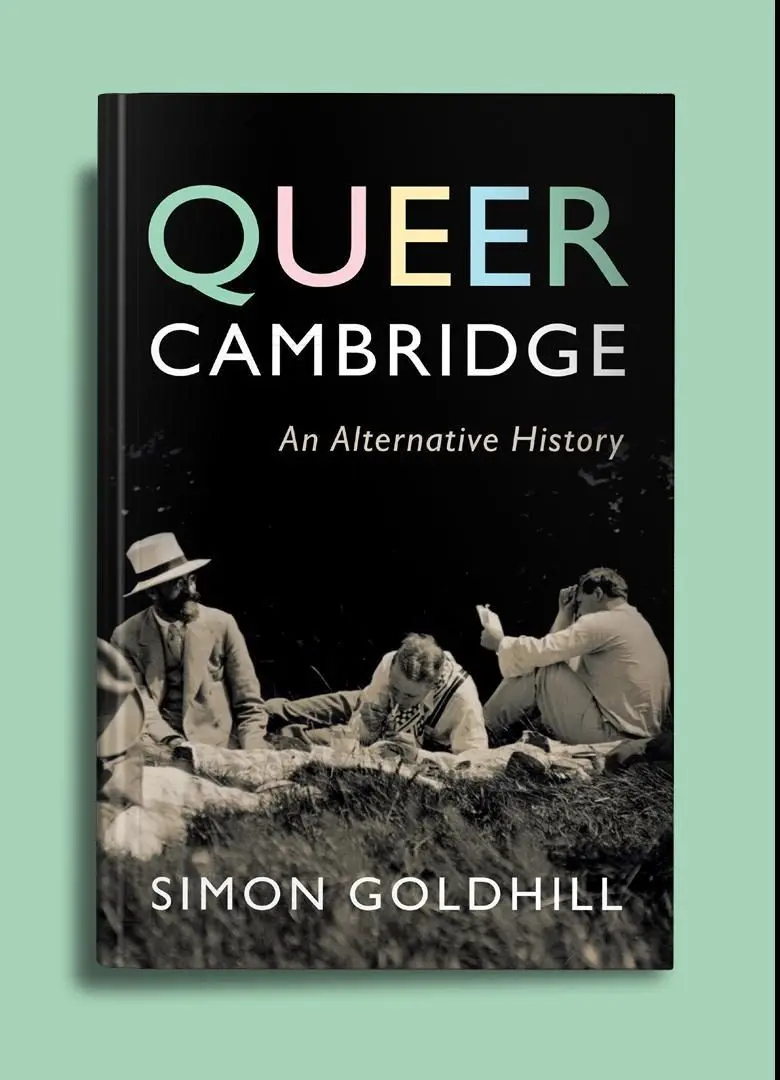
Simon Goldhill’s Queer Cambridge: An Alternative History tells the fascinating story of this and a series of other relationships between gay men who individually and collectively dominated the life of King’s College for much of the late nineteenth and twentieth centuries. The book is at once rather narrower and much more wide-ranging than its title suggests.
It was inspired by the author’s realisation that a single staircase in the college had been home to a succession of gay dons from the period when “the homosexual” as a medical category had first been defined in the 1880s to the legalisation of sex between men in most of the UK in 1967. By charting their lives and relationships, he primarily reveals the lives of these men in (and their contribution to) King’s College: Sheppard, for example, would go on to be provost and a formative influence on the institution.
At the same time, the book has much to say about the place of gay love, male relations and homosexual networks in the British establishment — and society generally — during an era of evolving public attitudes. Indeed, many of the individuals discussed (such as Rupert Brooke and John Maynard Keynes) would acquire iconic status in British culture or make a fundamental contribution to the world at large.
The remarkable liberalism of sexual attitudes at King’s in the Edwardian era is particularly striking. Elsewhere at this time, men who were attracted to men were still suffering the moral backlash following Oscar Wilde’s trial a generation earlier. At the Founder’s Feast at King’s in 1909, however, things nearly got out of control: the young Keynes (then in his first year as a Fellow) reported:
Yesterday evening will always mark an epoch … in the history of King’s manners. If there was debauchery, it was private. Manners not morals gave way. Quite suddenly our rigid rules of convention that one kisses no one in public utterly collapsed — and we all kissed! The scene really can’t be described.
As Goldhill explains with remarkable skill and empathy, the subculture that developed and thrived at King’s was rooted in intergenerational sociability between older fellows and younger fellows and a particular social nexus between the college and the major public schools, Eton especially (which had instructed or employed many of the dons).
The high profile of the Chapel in college life also played a part; after all, if musical skill were passed on purely reproductively, organ scholars would have died out long ago. The “queer space” of King’s was unique even within the rather odd place that was and is Cambridge. The gay fellows of King’s were far more politically liberal than their counterparts elsewhere (such as Peterhouse) and far more open.
Homosexual fellows of Trinity, we are told, would seek refuge at high table in King’s, escaping the intellectual frigidity and deep-rooted homophobia that characterised their “home” institution.
Goldhill’s use of the term “queer” will raise some hackles. It is, however, well justified. Even those individuals he charts who ended up marrying women and raising (although not necessarily fathering) children lived lives that marked them out far more sharply from the publicly acceptable mores of society than do those of many present-day married, child-raising, gay academics, whose lifestyle is entirely heteronormative.
The author also charts how the special subculture that had arisen at King’s broke down in the context of legal liberalisation and it ceasing to be an all-male college. Under criminalisation and public discrimination, gay male dons were largely spared the hostility of their relatively liberal heterosexual colleagues, through being perceived as a “persecuted minority”.
In recent decades, however, such protection has largely been lost, and across academia in general and Oxbridge in particular, homophobia directed at gay men has become increasingly common, disguised as an attack on “male privilege”.

The book closes by portraying two figures whose lives spanned the transition from public illegality to legality, alongside growing isolation of the figure of the gay male. The first is the late Peter Avery (1912 — 2008), a brilliant scholar of Persian, who went out of his way to scandalise colleagues; with a strong predilection for “rough trade”, Avery spent most of his pension on rent boys, whom he would bring into college.
On one occasion, as the more earnest of the fellows around him were discussing what they liked to read at night, Avery interjected: “The only thing I read in bed is tattoos.” The second is the economist, James Trevithick (who is still alive). The product of a Catholic boarding school, Trevithick only began to come to terms with his homosexuality when teaching at the LSE, where he formed a relationship with a dashing and brilliant student of Greek Cypriot origin.
Moving to King’s, he then encountered the final efflorescence of the gay college of old. As that world faded away, he would head into town to enjoy the atmosphere in Cambridge’s handful of gay bars and clubs, now no longer in existence. The best of these, we are told, was a “club” (really a smart pub) “on the edge of town, where university men mingled with American Airforce staff from the bases and local young men”. At its height it was — like King’s — a special place, where many enduring friendships were formed. Yet everything changes in the end and not always for the better.
Soon after this venue closed, a student of mine told me that he and some friends had gone in search of it, hoping to escape college for a proper night out. They found the doors locked and the windows boarded (it had been bought up by two gay property developers to turn into “yuppy flats”). As a result, they went to the petrol station over the road, bought some cans of super-strength lager and drank them sitting in a skip. They would have made a sorry sight … but one suspects Avery would have been happy to join them.


