


This article is taken from the April 2026 issue of The Critic. To get the full magazine why not subscribe? Get five issues for just £5.
A.E. Housman once ate a hedgehog. The unfortunate creature is not the usual diet of poets and classicists, but Housman was a committed gourmand who enjoyed going to France and Italy on culinary expeditions, where he delighted in sampling new and unusual foodstuffs. On one occasion, this included un hérisson.
What Housman made of the unorthodox meal has not been recorded, but clearly the professor and writer was not so repulsed by it to abandon his trips to Europe to munch and quaff: he kept them up until just before his death in April 1936.
Housman is not as widely read today as he once was, and he has come to be recalled not as a committed truffle-hunter and continental traveller but through an altogether different prism. Both W.H. Auden and Tom Stoppard depicted him as a deeply repressed homosexual, eaten up from the inside with unrequited love for his Oxford friend Moses Jackson — a name that even Stoppard might have hesitated to give one of his characters — and pouring out his fettered emotions first into a series of technically brilliant scholarly articles and translations, then in a few elegant, heartbreaking collections of poetry, of which the best-known remains 1896’s A Shropshire Lad.
He differed from his Oxford contemporary and fellow homosexual writer Oscar Wilde, who, in Stoppard’s The Invention of Love, becomes the initially unseen superego to Housman’s id. Wilde conquered the known world with his wit and literary sophistication before meeting his Götterdämmerung at the hands of the British justice system in 1895: the same year that Housman began writing the series of poems that would make up A Shropshire Lad.
The flamboyant Anglo-Irishman was everything that AEH was not. As Stoppard’s incarnation of the character declares, “the betrayal of one’s friends is a bagatelle in the stakes of love, but the betrayal of oneself is a lifelong regret”. Wilde lived his life without compromise or concern for conventional morality, and he paid the price for it. Today, he is regarded as a hero, both by the queer movement and by anyone who cares about the art of writing.
Housman, by way of contrast, has suffered. Auden’s judgement, as expressed in his sonnet “A. E. Housman”, was not unsympathetic but reserved. Writing that “Heart-injured in North London, he became/The Latin Scholar of his generation”, the younger poet observed that
Deliberately he chose the dry-as-dust,
Kept tears like dirty postcards in a drawer;
Food was his public love, his private lust
Something to do with violence and the poor.
This clearly influenced Stoppard’s perception of Housman, and informed his depiction of him in The Invention of Love as a tweedy, desiccated figure who only comes to life when contemplating his beloved Jackson, portrayed on stage as a hearty, none-too-bright character who is both horrified and outraged when Housman finally plucks up the courage to declare his feelings for him.
This was drawn from life, pretty much. Housman attended St John’s College, Oxford — the college where another, similar poetic figure, Philip Larkin, would later study — and was a contemporary there of Jackson, with whom he later lived in digs in Bayswater whilst both worked as clerks for the Patent Office.
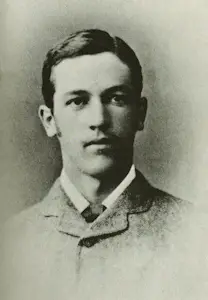
Why and how did Housman — who Auden described, accurately, as “the Latin Scholar of his generation” — end up going from what should have been a glittering career, laden with prizes, at Oxford to a menial clerking job? It remains a mystery, although for a long time it was imagined by romantic biographers that Housman deliberately flunked his final exams in order to avoid the academic path that was imagined for him and instead set up domestically — if platonically — with Jackson.
It now seems far more likely that Housman, in fact, was too arrogant to do the work that he needed to do, and came a cropper when faced with the strictures of the unforgiving Oxford degree system. Wilde, by contrast, did exactly what he was supposed to do — in flamboyant, look-at-me style, admittedly — and walked off with a first.
It is also generally accepted that, at some point in Bayswater, Housman declared his feelings for Jackson, and that these were adamantly unreciprocated.
In his late, heartbreaking poem, “XXXI: Because I Liked You Better”, Housman wrote quite explicitly about what happened when he offered his love up, as if on a platter, only for it to be rejected:
Because I liked you better
Than suits a man to say,
It irked you, and I promised
To throw the thought away.
To put the world between us
We parted, stiff and dry;
“Good-bye,” said you, “forget me.”
“I will, no fear,” said I.
Housman and Jackson ceased to live as flatmates around 1885, and then a series of events kept them asunder. Jackson moved to India two years later, married and, as far as we know, never met Housman again after a final encounter in 1889, although they maintained a sporadic correspondence that lasted until Jackson’s death from stomach cancer in 1922 whilst living in Vancouver.
Housman acknowledged this to their mutual friend, Alfred Pollard, by writing, “Now I can die myself; I could not have borne to leave him behind me in a world where anything might happen to him.” It is near certain that Housman’s collection Last Poems, published that year, was intended as a tribute to him, although it is unknown what the dying man made of the heartfelt, even impassioned poems of homosexual love within it.
Thus the private Housman has traditionally been seen as a deeply unhappy figure who was eaten from the inside by regret and misery. Unlike that other very English writer, E.M. Forster, who had a long and happy relationship with a policeman, Housman is not known to have had any romantic partners, although biographers have speculated that his trips to Europe (where he flew in converted bombers) were intended, in part, to allow him to pursue le vice Anglaise with various accommodating young men. Unless some correspondence ever emerges, we shall likely never know.
What we do know is that, when he wasn’t producing editions of Juvenal and Lucan still regarded as magisterial, Housman was writing poetry. From A Shropshire Lad onwards, his verse can be summed up as combining wistfulness for a rapidly vanishing England, in the pastoral tradition, with a clear-sighted, even downbeat, awareness of mortality. In one of his best-known poems in A Shropshire Lad, “XL”, he wrote:
Into my heart an air that kills
From yon far country blows:
What are those blue remembered hills,
What spires, what farms are those?
That is the land of lost content,
I see it shining plain,
The happy highways where I went
And cannot come again.
Housman’s style was ripe for parody — Hugh Kingsmill’s “What, still alive at twenty-two/A clean, upstanding chap like you?” — but it also chimed with a generation of young men who faced oblivion in the Great War. As they prepared to meet their ends in Flanders and Ypres, the soldiers clutched copies of A Shropshire Lad and its redolence of home to their breasts with as much fervour as if it were the Bible.
Housman, for a man who was seldom clubbable and enjoyed, if that’s the mot juste, a life as a bachelor who kept to his rooms in Cambridge and grumble-quipped that “death and marriage are raging through this College with such fury that I ought to be grateful for having escaped both”, became popular and even wealthy in his own lifetime. His own vein of romantic pessimism, marrying classical rigour with a deep love of England and Englishness, spoke to anyone who loved their country, and it continues to do so today.
And Housman — who his brother Laurence once said, in another intriguing contradiction, had “the happiest laugh I’ve ever heard” — paid his own homage to Wilde, too. When his university contemporary was sentenced to two years’ hard labour, he wrote a scornful, angry poem, “Oh Who Is That Young Sinner”, which came as close as he ever did to making a public or social statement about homosexuality:
Oh who is that young sinner with the handcuffs
on his wrists?
And what has he been after that they groan and shake
their fists?
And wherefore is he wearing such a conscience-stricken air?
Oh they’re taking him to prison for the colour of his hair.

Wilde was released from prison in 1897, a broken man, and spent the last few years of his life drifting around Europe, cadging loans from friends. He died in Paris in poverty in 1900, quipping “either that wallpaper goes or I do”, just as Housman’s collection of poems was beginning to make him a respected poet, as well as a much-feared classicist. (His reviews of rival classicists were hilariously scathing and drew blood; on one occasion, he wrote, of an unfortunate Ovid scholar, “The disfigurement inflicted upon Ovid’s text by Mr Owen’s recension is not a matter of dispute.”)
Today, Wilde remains a byword for style, wit and chutzpah, whilst Housman cowers, a byword for repression and mealy-mouthed fear. Anyone who has read his poetry, and been struck hard by the barely concealed emotion in it, will know this to be untrue, and unjust, but posterity is a cruel mistress.
Still, A.E. Housman ate a hedgehog, and that, at least, is not something that everyone can say that they have done.


