Orbánism is not dead
The veteran Hungarian prime minister is going but his agenda lives on
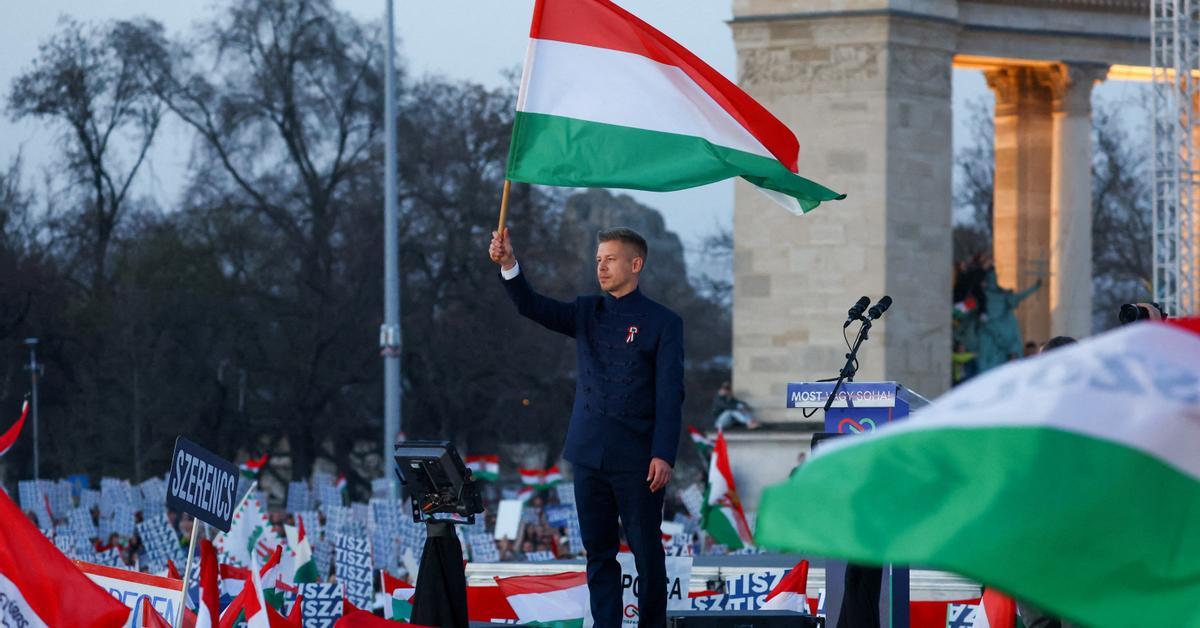
Every party has to come to an end eventually – it’s just unfortunate when it ends in a bloodbath. That’s ultimately what happened in Hungary at the weekend as Viktor Orbán’s 16 years in power came to a brutal end after a landslide defeat to Péter Magyar — a former member of his own party who no one had even heard of two years ago. Armed with a supermajority, Magyar’s Tisza party will have huge scope to remodel the Hungarian state as they see fit. What this means for the global populist right for whom Orban served as a lodestar is anybody’s guess.
Little is known about the incoming prime minister. He claims to be a conservative and there’s good reason to believe him. A former mid-ranking civil servant in Orbán’s once-dominant Fidesz party, he was reportedly passed up for promotion by the party hierarchy multiple times until he eventually lost patience and quit in February 2024 while going public with allegations of corruption against a number of Fidesz insiders. He launched his political campaign the following month, promising to clean up Hungarian politics and also mend relations with the EU. Since then, he’s served as a perfect blank canvas onto which all of Orbán’s critics could project their hopes and dreams.
This has led to a weird situation where he has been portrayed as some sort of democratic freedom fighter by both the liberal media and Brussels elites alike, even though he promised to keep Orbán’s big beautiful border fence, refused to comment on Fidesz’s attempted cancellation gay parades last year, and expressed only lukewarm support for Ukraine — all while wearing traditional folkloric shirts that would probably be described as “white nationalist” coded by the #FBPE crowd. The only reasonable assessment of Magyar at this moment is that he’s an unknown quantity and that we can only speculate about his true convictions and how they will affect Hungarian politics.
Join Britain’s most civilised publication.

Challenge the consensus. Access rigorous analysis.
For now, the only thing that is likely to change is a shift in tone from confrontational illiberalism to a more restrained patriotic conservatism because Magyar’s focus will be on purging state institutions of Fidesz appointees so he can rule with a free hand and unlock some €18 billion in frozen EU recovery and cohesion funds that Brussels withheld from Orbán. His response to Budapest Pride this summer will be a possible indicator of just how far he intends to dismantle the Orbánist state. State officials with Fidesz loyalties are almost certainly doomed, but the Hungarian capital could yet remain a bastion for rightwing think tanks and networks that will help sustain Fidesz-style populism as a political force in the long run.
For those who, like myself, sympathise with the Orbán worldview and are desperately searching for a hit of copium to help them process this uncomfortable new reality, there are some faint reasons for optimism. Reprogramming the machinery of government will consume most of Tisza’s bandwidth: one outgoing Fidesz minister once told me that it took nearly 10 years to get all the right people in place so they could govern effectively. So if Magyar does have secret plans to turn the country into a progressive utopia, implementing them may take some time. And although Tisza seems impervious right now, cracks could well emerge in its electoral coalition, which was primarily driven by an antipathy for Orbán rather than a concrete set of policies or values.
All other opposition parties stood aside for Magyar to give him a clear run at the premiership. With Orbán finally deposed, they will start to campaign against Tisza and try to peel away the many voters who only voted for the party because it was the anti-status quo option. If the incoming prime minister does indeed stick to his professed conservatism, liberal parties will pitch themselves to the cosmopolitan youth vote. Should this happen, political logic suggests that Magyar will tack to the right and make a case to former Fidesz voters that he’s their best bet if they want to stop blue-haired progressive revolutionaries from seizing power.
Orbán should take comfort from the fact that he [has] remade European politics in his own image
Furthermore, the current levels of enthusiasm are unsustainable and crashing disappointment is inevitable once Tisza’s supporters realise that this was just an election, not a revolution, and that the government is actually pretty powerless against structural problems that affect all of Europe, like rising inflation, stagnant growth, and weak public finances. To quote political scientist Ivan Krastev: democracy is all about practicing the art of bearable dissatisfaction. Most voters are fickle and have no real understanding of how politics really works, so it’s highly likely that many will be disillusioned by the slow pace of change. Perhaps a new-look Fidesz with a refreshened leadership team will be able to use this to their advantage and stage a comeback.
What seems most plausible right now is that Magyar will probably bring a similar approach to government as Italian prime minister Giorgia Meloni. Whatever happens, it’s highly unlikely that he’s going to be the one to take Europe back to the progressive insanity of 2015, when Angela Merkel thought she didn’t have to think twice about the consequences of autocratically suspending the entire EU immigration system and inviting more than a million unvetted illegal migrants to take up residence in the bloc. That world is gone now, in part because Viktor Orbán took up the fight and won the argument. In that regard, he might be leaving office with the sting of defeat ringing in his ear, but he should take comfort from the fact that he does so having remade European politics in his own image.
Enjoying The Critic online? It's even better in print
Subscribe today to Britain's most civilised magazine
Subscribe