Birbalsingh vs the blob
Labour’s education policy is simply concessions to special interests
When a fight erupts in school these days, the action is typically filmed, turned into digital content and amplified through social media for days or weeks following. These aftershocks are often more significant than the original flashpoint.
A similar dynamic seems to be at play in the ongoing ruckus between Secretary of State for Education Bridget Phillipson and the headteacher of Michaela Community School Katharine Birbalsingh.
The two met last week after Birbalsingh published an open letter in which she chided Phillipson, and specifically the legislation she has recently introduced, for giving “the impression of having an unreasonable and unwarranted dislike of academies, blinded by Marxist ideology.”
Join Britain’s most civilised publication.

Challenge the consensus. Access rigorous analysis.
The meeting itself was a dead rubber. Birbalsingh has followed it up with a blistering second open letter and spent last weekend denouncing Phillipson across the nation’s media; for her part Phillipson has briefed that she “doesn’t need lectures from anyone” and branded Birbalsingh’s account a “total work of fiction.” Its consequence so far has been in generating material for online reaction, and cementing friend/enemy distinctions.
Which is not to say that this is some vaporous online tiff. The issues at stake in Phillipson’s legislation are important — both in themselves and in what they signify. It is just to make the point that having one of the most strident conservative voices in the public square take aim at your bill is not the worst outcome for a Labour Secretary of State looking to shore up support amongst teachers, unions and civil servants.
What issues are at stake then? The Children’s Wellbeing and Schools Bill, currently in committee stage, has far-reaching scope for both social care and education, and constitutes one of Labour’s key legislative ambitions for its first year of government. Initially planned as uncontroversial reforms to children’s social care, much of it formulated by the last government, it has expanded to become what Neil O’Brien, Shadow Education Minister, calls “a highly ideological, un-evidenced onslaught on school freedoms”.
The bill is a bloodless prioritisation of proceduralism and entrenched interest over the nation’s children
The proposals attracting the most criticism are those that will limit the independence of academies, which are schools run outside of local authority control that were created by New Labour but turbocharged from 2010 by Gove and his successors such that about half of all state-educated pupils are now taught in them. These limits include a requirement for new teachers to have Qualified Teacher Status, and for their pay and conditions to be standardised across the sector. Academies will also be forced to follow the national curriculum, itself the subject of a wide-ranging (and, for conservatives, much feared) review. The measure of freedom enjoyed by academies over school admissions is also likely to be quashed, for instance by reducing places at popular schools to force families into less desirable schools instead (the so-called “Corbyn Clause”).
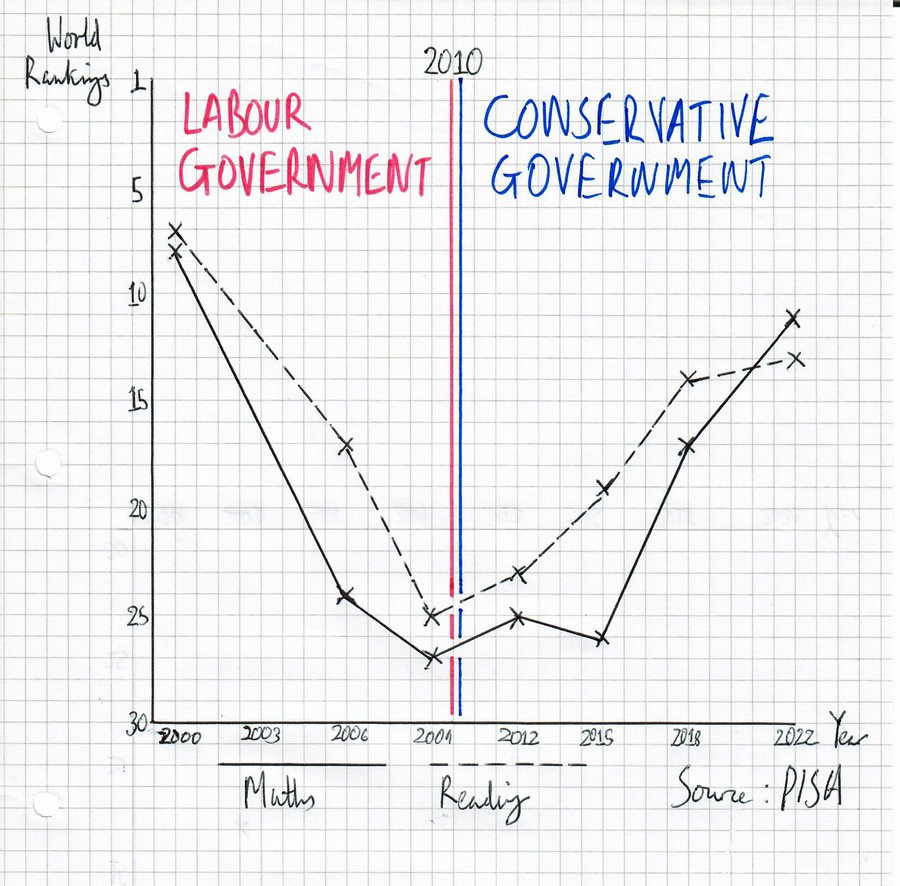
The themes that run through the 128 pages of the bill are standardisation and centralisation: it is a reassertion of Whitehall power over the autonomy of academy trusts and their leaders. Its merits are highly questionable. The Tories are right to see their school reforms as one of the few successes from their time in government, when English pupils made consistent progress in the global English and Maths PISA rankings.
That is why Birbalsingh is far from the bill’s only critic. Many leaders, especially those who have run academies or groups of academies (called Multi-Academy Trusts), have given evidence of the ill effects that will flow from this erosion of their autonomy. They will be hindered in their ability to attract and keep good staff; they will not be able to adapt their curriculum to local needs; their powers to take over local failing schools will be frustrated. Why, they feel, should a Whitehall official be better placed to make these calls than they are?
Such voices are beginning to be heard, and Phillipson has already had to backtrack on teacher pay after pressure from Downing Street. We can only hope that the patient examination of the bill by the Shadow Education Secretary and Education Minister ends up rescuing the bill from its most egregious proposals.
But it is by looking at where these proposals originate that we can see this bill’s wider significance. If you are able to make it through Phillipson’s dreary gauze of obfuscating metaphor — the barriers being broken down, the opportunities opened up, the ceilings smashed, the floors lifted — the most striking revelation is its hollowness of vision. It bears no evidence of 14 years of time well spent diagnosing the problems facing the nation’s children. Rather it represents a series of disconnected concessions to interests: the interests of the DfE, who want to re-entrench powers lost; and the interests of the unions, who Phillipson met 33 times in 3 months last year and who naturally see in her, a member of the Labour Party since the age of 15, a vehicle for improved pay and conditions.
As such, the bill should be seen as demonstrating in stark terms the governing philosophy we are now living under: a bloodless prioritisation of proceduralism and entrenched interest over, in this case, the nation’s children and families.
It is therefore not just for her spirited opposition to a series of system changes that we should praise Birbalsingh but for her wider Tory radicalism. She may claim, in her first letter to Phillipson, to be a floating voter — but Birbalsingh remains surely the most passionate speaker for an older, more Romantic conservative sensibility: not just in her style (her rhetorical panache, her almost coming to tears in her frustration at Phillipson’s vandalism) but in the way she runs her school: teaching her pupils to speak in public, encouraging them to learn great English poetry by heart, freeing them from their smartphones, even instilling in them some measure of national pride.
Her verve, her sheer humanity, is the perfect riposte to the deadening worldview of zombie managerialism, exhibiting exactly the vitality that the right so sorely lacks. After all, most voters would say that, after the Tories, in spite of their undoubted success in the PISA tables, our schools remain in much need of improvement. RSHE is a scandal that only worsened under the Tories; smartphones and a slew of desiccated educational technology dominate the school day; the sorts of curriculum choices made at Michaela are still the exception. UK children are, at the median, some of the most unhappy and truant in the world. And whenever they are given an opportunity, a majority of young people express negative feelings about the country that border on contempt.
If it was just a question of systems, the academisation programme would have seen at least some progress in at least some of these areas. Children spend more time at school than any other organ of the state: conservatives need to use their own time in opposition to diagnose how they form — or deform — character and so avoid another lost generation. It is not just Birbalsingh’s freedoms that need protecting: it is her character and her courage — such that it can be emulated by a new generation of school leaders and so spread its influence to the millions more children who need it.