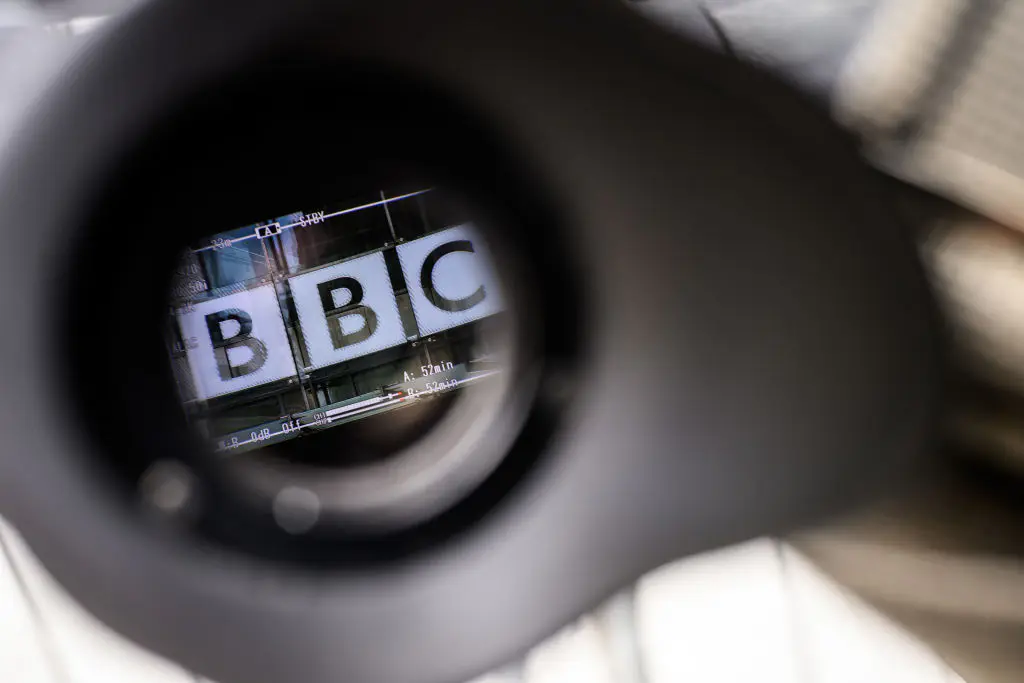
Bye bye, Beeb?
A Netflix-style subscription model is the only way to save the BBC

There is a new element to the BBC’s World Cup coverage this year. At some point in every match, the commentator will earnestly remind viewers that they need a TV licence to watch the game. It is a well targeted message, though almost certainly ineffective. If there is one time when the millions of people who claim to never watch the BBC are watching the BBC, it is during the World Cup.
The BBC’s doom loop is gathering pace. The trickle of non-payment of the licence fee is becoming a flood. Prosecutions for non-payment have plummeted in recent years and the threat of licence fee “evasion” being decriminalised hangs over the corporation. As revenue declines, budgets are cut and services are cancelled. Radio 4’s long wave broadcasts ended over the weekend and the BBC is looking for £500 million of savings by ending shows like The World Tonight and Money Box Live.
Until fairly recently, people who wanted to abolish the licence fee tended to hate the BBC because of its perceived political bias. I am not a BBC hater. Perhaps I would be if I was exposed to more of its output. I don’t watch Question Time. I have never listened to the Today programme. I stopped watching Newsnight when budget cuts turned it into a glorified podcast. I do read the BBC News website and am as baffled as anyone by its obsession with drag queens and am frequently annoyed by the way it reports every new restriction on liberty from the perspective of “campaigners” who think that whatever draconian measure the government has just enacted “doesn’t go far enough”, although I haven’t found ITV or Sky to be much better on that score.
Join Britain’s most civilised publication.

Challenge the consensus. Access rigorous analysis.
As state-owned leviathans go, the BBC performs better than free market economists like myself might expect (it helps that, unlike the NHS, it has plenty of competition to keep it on its toes). As someone who appears on the BBC from time to time, I have found producers, researchers and presenters to be generally fair-minded and hard-working folk who are doing their best with limited resources. Of course I would prefer it if the overarching narrative of its news output was not that the state should be bigger and do more, but that is the water in which Britain now swims and it is not obvious that abolishing the licence fee would change this. On the contrary, without the BBC Charter and its “ethos”, people like me might not be invited on at all. (It is only fair to mention that some people hate the BBC because they think that it is too right-wing, but those people are all insane.)
I come, then, not to bury the BBC but to help it survive. There has never been a good moral argument for forcing people who do not watch a television station to pay for it, but for most of the corporation’s history, the morality has been irrelevant because nearly everybody who had a television watched the BBC and there was no way of limiting television owners to watching commercial stations.
Streaming changed all that. The BBC is no longer a public good as an economist understands the term. Public goods are non-excludable: you cannot prevent people from using them. When all you needed was a TV aerial, the BBC could only make you pay to watch its programmes by sending you threatening letters. By switching to a Netflix-style subscription model, the BBC could exclude those who do not pay.
This is the obvious solution and it needs to be done soon because the threatening letters are no longer working. Since 2014, the TV licence fee “evasion rate” has risen from 5 per cent to 12.5 per cent and revenue from the licence fee has fallen by 28 per cent in real terms, hence another round of cuts. As David Elstein noted in last month’s issue of The Critic, prosecutions for licence fee evasion have fallen from 150,000 a year to around 25,000 and the average fine is barely more than the cost of a licence. It is an extremely low risk crime and the BBC wastes £160 million a year trying to tackle it. As the word spreads that paying the licence fee is essentially optional, more and more people will become “evaders”.
Some of these people genuinely never watch live broadcasts and never use the iPlayer, but it is safe to assume that most of them are simply saving money. How many of them would cough up £180 if it was the only way they could access BBC content is the big question and it will become more pressing if licence fee evasion spirals, as seems likely.
As Elstein says, the BBC’s fierce opposition to moving to a subscription model “borders on the irrational”. The corporation fears that if people were given a choice between paying for the BBC and not watching the BBC, millions will decide to stop paying for the BBC. If so, that is not our problem. The BBC is not the army. It is not the police. It provides entertainment, and no one should be compelled to pay for entertainment they do not consume.
But does the assumption that a subscription model would mean less revenue stack up? When the evasion rate was very low, it seemed plausible, but the economics of it are less clear when one in eight households do not have a licence. If that rose to one in four, it would become highly contestable.
It is easier to make the case that a subscription model would boost revenue if done properly. If the BBC’s live broadcasts were made available to the whole world and were packaged together with BBC Radio, the iPlayer and the valuable BBC archive, it would be a highly attractive proposition. Netflix has 16.6 million subscribers in Brazil, 12.4 million in India, 6.9 million in Australia, 4.2 million in Indonesia and 1.8 million in Singapore. Altogether, it has over 325 million paid subscribers. Britbox, which is now wholly owned by BBC Commercial but has only as fraction of the BBC archive and does not have live broadcasts, already has four million subscribers despite not being available in India, Africa, South America or even New Zealand. Last year, BBC Commercial was responsible for a third of the BBC’s total income.
We don’t know how much people value the BBC’s televisual output because it has never been put to the test
This is where the opportunity lies. There are two billion televisions in the world and only 50 million of them are in the UK. It might take a bit of trial-and-error to discover the revenue-maximising price for a global BBC subscription, but the corporation should have enough faith in itself to believe it can take a large enough sliver of the overseas market to make up for any losses in the domestic market. It is not even clear that there would be any losses in the domestic market. A licence fee of £180 a year amounts to £15 a month, not a great deal in modern television terms (I recently cancelled TNT Sports when the price went up to £34 a month). If the “evaders” had to do without any BBC programmes, how many would become subscribers?
We don’t know how much people value the BBC’s televisual output because it has never been put to the test. The majority of Brits pay the TV licence because they feel compelled to do so while a growing minority watch the BBC for free because they feel — justifiably — that they are at little risk of being prosecuted. It is unethical to force people to pay for entertainment that they don’t watch, but it is also immoral to steal entertainment that other people are paying for. A Netflix-style subscription for the BBC solves both problems. What are we waiting for?
Enjoying The Critic online? It's even better in print
Subscribe today to Britain's most civilised magazine
Subscribe