

Feminism’s search for the perfect woman
On two biographies of Mary Wollstonecraft
When Mary Wollstonecraft was living in London and writing for Joseph Johnson’s Analytical Review, she fell in love with an artist named Henry Fuseli. Both members of the flourishing circle of radicals around Johnson, she saw him often and found him brilliant and magnetic. When she could no longer bear it, she turned up at his house and with characteristic conviction begged his wife to let her move in with them, so she could unite herself with his mind. The wife refused. Poor Wollstonecraft tried to explain that her infatuation was purely platonic.
In the late nineteenth century, there was renewed interest in Wollstonecraft; the writer and art critic Elisabeth Pennell wrote a doting biography in 1884, and a new edition of the Vindication of the Rights of Woman was published with a foreword by Millicent Fawcett in 1891. Before this she was not often invoked by campaigners for women’s rights in Britain, even though translations of her work had found success elsewhere in Europe. At home, her reputation had been tarnished by the memoirs written by her widower William Godwin, which had revealed her child out of wedlock and two suicide attempts to an easily scandalised public. As a result, Pennell’s was the first full-length biography of the women we now know as the mother of feminism. Noting the attacks on her character, Pennell wrote: “the life which follows may serve for their refutation.” The Fuseli affair did not make it into Pennell’s biography.

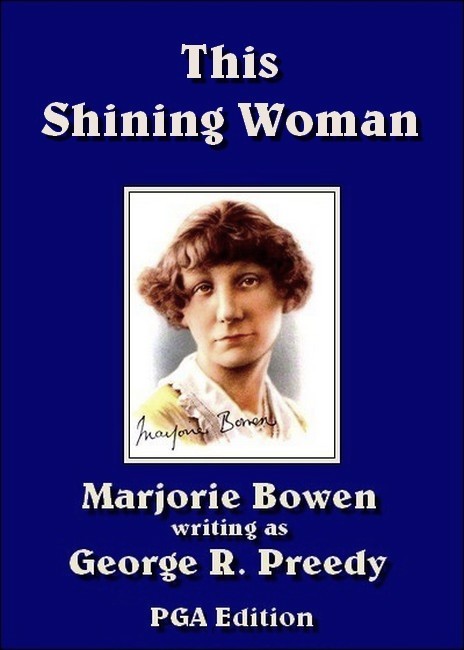
Wollstonecraft’s revival at the hands of late nineteenth-century feminists succeeded in restoring her reputation, but they also left much to be desired in the understanding of her person. Here, Wollstonecraft was explicitly garlanded as giving the “first word in behalf of female emancipation”; she was the “forerunner of a movement.” But in their attempts to make her an aspirational idol for a modern movement — led largely by respectable married women — her romantic escapades were downplayed and her virtues exaggerated. This was remarked upon by George R. Preedy (one of the many pseudonyms of the novelist Margaret Long) in the introduction to her own attempt at a fictionalised Wollstonecraft biography in 1937. Judging by the acid tone of the introduction, the mischaracterisations of Pennell and others had played some part in fuelling the writing of This Shining Woman.
Join Britain’s most civilised publication.

Challenge the consensus. Access rigorous analysis.
Their difference in judgment becomes most apparent in their telling of Wollstonecraft’s relationship to the American Gilbert Imlay. Wollstonecraft met Imlay in France while the revolution was underway, and despite having a child with him, they never married. Pennell contended that the two were as good as married: “In order to retain her society and also to silence any scruples that may arise, they held her to be an injured wife, as indeed she really was, not a deserted mistress.” This reflected the particular concerns of the early suffragette movement, which presented the women’s cause not against family and marriage, but one that would improve family relations. Both Pennell and Fawcett were keen to emphasise that Wollstonecraft was not attacking the institution of marriage, and wished instead only to improve it; she had always been a “worshipper of domestic life”.
Wollstonecraft did worship an idealised intellectual union between man and woman. But she fluctuated on the institution of marriage as the proper institution for such union, and she was outwardly proud that she hadn’t married Imlay: “I am acquiring the matrimonial phraseology without having clogged my soul by promising obedience.” In Imlay she thought she had found the lasting “habitual affection” she longed for because their union was grounded in reason, and thought official marriage of little consequence. But once their relationship had deteriorated, and Wollstonecraft and their young daughter Fanny were following an increasingly distant Imlay around Europe, she was not in law or in practice an injured wife — in her letters she fluctuated between feigned indifference and abject desperation.

In Preedy’s narrative this development was evident all along: the revolution provided the excuse that it would be difficult to get married, but really “Gilbert Imlay did not care about matrimony and Mary dared not press the question … ” Her misfortune, on Preedy’s telling, was entirely of her own making. She did not share Pennell’s desire to read purity of motive and considered judgement into Wollstonecraft’s every move. A later biographer wrote that “She had obeyed the rules of her own morality, if not the world’s.” Preedy considered this as sentimental nonsense, covering up Wollstonecraft’s impressive ability to rationalise her passions to herself.
Preedy’s judgements, though often harsh, were aimed at the misplaced attempt to reconfigure Wollstonecraft into the ideal feminist housewife: “How cold and priggish does such a theory make this warm-hearted woman out to be!” Preedy mocked Wollstonecraft’s attempt to recast her strange obsession with Fuseli as a noble pursuit with lofty standards: “She wrote and wrote, covering up the fact that she had fallen in love with turgid phrases in which she at once declared the strength of her feelings and their complete purity — ‘unalloyed’ by passion, as she claimed.” It was not incidental that Preedy’s biography was a novel — she found Wollstonecraft’s life more interesting than her thought. She emphasised Wollstonecraft’s imperfect passions, not least to free her from the shackles of Pennell’s instrumentalised idealisation.
Pennell sought to unite the life with the ideas, but not only did she leave out more unsavoury parts of the life, she also left out the less convenient parts of the thought. Indeed she too found the Vindication lacking in content, and didn’t dwell on Wollstonecraft’s unfashionable musings on femininity and masculinity: the ideal woman to Wollstonecraft embraces what she calls the “masculine virtues” of reason and rationality, and her deprecations of feminine frivolity are so sweeping that Susan Gubar has dubbed it her “feminist misogyny.” Wollstonecraft’s ideal woman was more like a man — but Pennell wanted to claim rationality and competence as feminine virtues. Both thought the rational marriage a more perfect union, but Pennell downplayed the disdain Wollstonecraft had for her fellow woman.
The biographical genre lends itself more than others to writers reading not only their own political biases and needs into their work, but also reading their own experiences into the life of the subject. Pennell was writing as much about her own movement as she was about Wollstonecraft’s political project and personal virtues, and the former took precedence. The image of Wollstonecraft that emerged may have been more sympathetic to contemporary feminists, but almost the opposite to later readers who would find this version positively prudish. Preedy, complimentary of neither, noted that Fawcett and Pennell seemed to “judge her in terms that now seem as old-fashioned as their heroine’s own diatribes.”
To fight for their place in the workforce, education, or public life, women en masse had to be competent
Preedy lived in a pessimistic era, and had lost all faith in progress: ridiculing earlier feminists she said “we can hardly claim that mankind moves in a steady progress towards some ultimate perfection,” or that women were better off. Keeping only some of the spoils of her novels to support her family, and dealing with an unsuccessful marriage of her own, she did not see the benefits of Wollstonecraft’s utopia. She lived in Wollstonecraft’s ideal society, where her “countrywomen had obtained “freedom” in the sense in which she used the word.” But, she argued, in such a society Wollstonecraft would not find her own “problems solved” or her “burdens lifted.”
Preedy’s life had many parallels to Wollstonecraft’s; both women grew up with alcoholic fathers, both throughout their lives had to provide for their families, and both travelled through Europe alone in periods of political upheaval and war. Preedy read her own position as a literary woman in the 1930s into Wollstonecraft’s work, shaped by similar challenges despite the political rights women then enjoyed. She quoted Hannah More, Wollstonecraft’s contemporary and staunch evangelical: “Rights indeed … I’m sure that I have always had more rights than were good for me,” and argued that the problems really afflicting Wollstonecraft were not about rights, they were about universal plights like poverty and family situation, circumstances that were as pressing at Wollstonecraft’s as Preedy’s time.
Women of all time periods sought a dual destiny according to Preedy — they want to be at once respected and loved. Neither of these goals could be awarded by political rights. Preedy did not view achieving the balance as an impossibility, but she thought Wollstonecraft would have been as restless and unhappy had she had the right to vote, and contended that women had as much influence on human affairs before abstract rights. In her dissatisfaction, Preedy downplayed — or underestimated — the benefits awarded to her by political rights, in order to rightly point out that they are not the final source of a woman’s happiness.
But especially the long and incremental battle to enter the public sphere — one both Wollstonecraft, Pennell and Preedy played a part in — was important for women’s place in modern society. One feature of Wollstonecraft’s society that Preedy conceded, was the widespread opinion “that a decent obscurity best suited even the most brilliant females.” Merely by writing, all of them challenged this premise. While Preedy may be right that women always had influence, they fought an important battle to achieve it in their own names. Over time this development and the fight for political rights provided a level playing field with men, so women too could scramble for elusive achievements and pursue excellence.
The feminist movement has always needed to represent women as responsible citizens, each individually deserving of the rights they were collectively asking for. To fight for their place in the workforce, education, or public life, women en masse had to be competent. Wollstonecraft’s ideas as they read on the page (or indeed Pennell’s own) were not enough for Pennell — her person had to become an exemplar of womanhood. Her mistaken faith in unsuitable lovers was transformed into principled stands with tragic outcomes, and her passionate life was sterilised and rationalised. Pennell sacrificed Wollstonecraft’s personality for the cause.
Preedy allowed more space for Wollstonecraft’s character and flaws, and this was no accident. Reflecting on Wollstonecraft’s relationship with Imlay, she set forth the contention that any women’s movement must grapple with: “In this, as in other unhappy love stories, all the nobility cannot be on the side of the woman and all the baseness on the side of the men, unless one allows — what Mary Wollstonecraft never would allow — that the purity of the female character is equalled only by the imbecility of the female mind.” The notion that a woman can do no wrong diminishes her faculties.
The idealisation of women was largely a defensive position, against those who considered women incapable. But as the feminist movement rumbled on, it has birthed a strain of sectarianism within feminism which is not only self-congratulatory, but deeply counter-productive. In current discourse on dating, child-rearing, politics, and workplace disputes, both sexes are the problem, and as long as we on average tend to harbour some complicated feelings towards the opposite sex, secession is not an option. And this kind of feminism has built up an almost impenetrable mechanism for deflecting criticism of the female sex. But the struggle for women’s rights cannot feign perfection; it must recognise that woman is judged, not in spite of but because of her capacities. The perfect female exists only at a distance, confined to the private sphere or the depths of history.


