Farage fumbles
“Stop Farage” seems to be a more effective message than “Farage”

On the radio, Reform’s Richard Tice was explaining that actually the party had never expected to win “what is actually one of the safest Labour seats.” Sure, Richard, sure. That’s what everyone says about by-elections: they’re never a problem for wildly unpopular governments in the middle of their terms.
There was denial all round on Friday, as we absorbed the Makerfield result, which put northerner Andy “North” Burnham, who is from the north of England but doesn’t like to talk about it, on course for Downing Street, replacing a man who promised change but didn’t have a plan with a man who promises change but… oh.
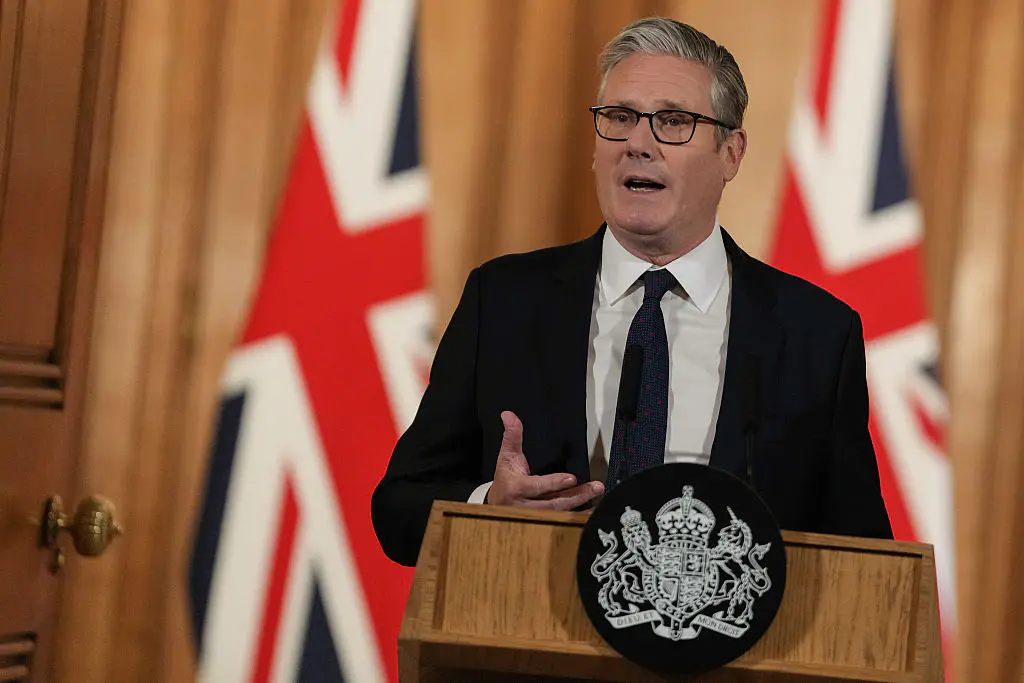
Keir Starmer certainly is in denial. He offered up a pooled clip, a way of giving words to camera without facing too much cross-examination. Would he fight for his job if Burnham challenged him? “If there is a contest, then yes, I will stand. I have said repeatedly, I am not going to walk away from that.” Well, the last couple of years have shown us how much we can rely on him not changing his mind.
At least Starmer’s party had won. Of Nigel Farage, there was at first no sign. The Reform leader remains in hiding, fearfully peering around the curtains in case he should see a journalist asking about the many millions in his bank account. Think of it as the Grifter Protection Programme. Helpfully this also gets around questions about whether Reform has peaked.
He did pop up after breakfast, releasing a proof of life video from a field in a secret location. It would be interesting to see him do an entire general election like this, perhaps holding up copies of that morning’s Daily Mail to refute the rumours that he had fled the country or was in a coma.
“I’m disappointed, no question about it,” he told us. Once again, the voters had let him down. In particular, he was fed up with the people who voted for Rupert Lowe’s Restore Party. “What do you want?” he said, addressing them somewhat petulantly. Can he give it to them without alienating people who don’t fancy throwing a wheelie bin at the cops?
The voters of Makerfield had, as Tice said, “sent a very clear message.” In fact, they’d sent two. They don’t like Starmer, but they don’t much like Farage either. As in Gorton and Denton, it had come down to a split between Farage and Stop Farage, and as in Gorton and Denton, Stop Farage had won.
In fairness, Andy Burnham’s victory in Makerfield owed a lot to a unique campaign message: Hate Starmer? Vote Labour! But a more popular opposition party might still have won a seat where, a few weeks earlier, it had triumphed in the local elections.
Burnham himself was triumphant, addressing supporters and the press at a football ground. He’d had an epiphany on the campaign trail: “You have to do something to make life more affordable, to put more money in people’s pockets, to give people more breathing space again so that they can have a better life.” Train travel, electricity, water, it was all going to get cheaper under Burnham’s glorious rule.
So that was it: people in the north want things to cost less. This is the kind of brilliant insight that escapes other less northern politicians, who with their fancy southern ways are too busy lighting cigars with £50 notes. Once Burnham has made it to Westminster and explained that bills need to be lower, the government will be able to deliver that, and with a bit of luck Labour will be ahead in the polls by Friday week.